 hackanooga
Sitting elbow to elbow with sailors building tools to make their own jobs easier is a pretty cool way to spend a week.
I was at Fleethacker in Norfolk with Defense Unicorns, supporting sailors using AI to turn problems they live with every day into working software.
There’s a lot of conversation about where AI can be useful. I got to sit next to the people showing us.
The experience also reinforced how much engineering remains after an application first works.
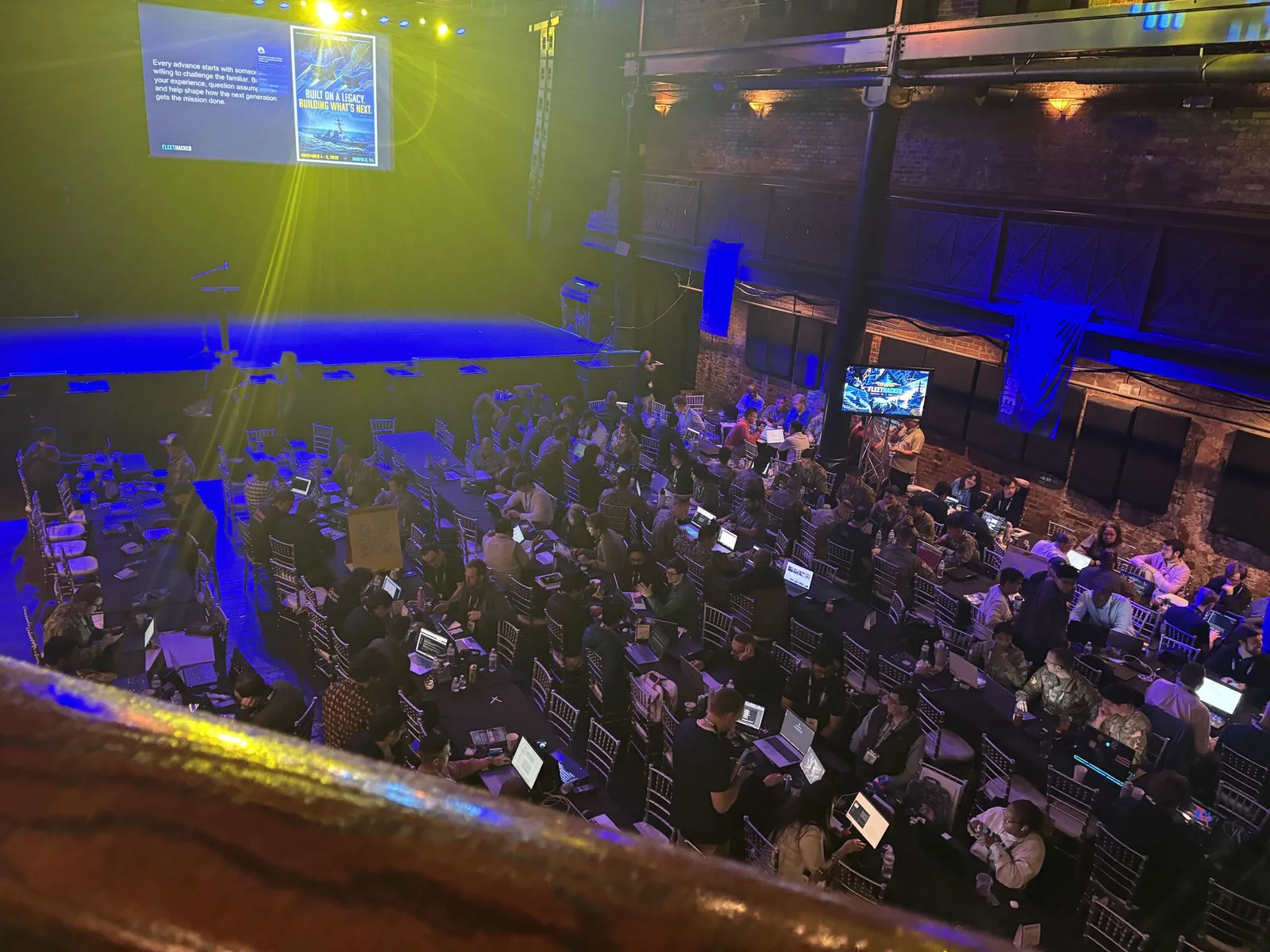
Building together at Fleethacker in Norfolk.
They already knew the problems
The sailors knew where the friction was. They knew which processes ate up their time and what would actually help them do their jobs.
That gave them something valuable before they wrote any code: a clear reason for the application to exist and enough context to judge whether it helped.
AI tools, including Codex, gave them a way to act on that knowledge. They could describe a workflow, generate an implementation, try it, and ask for changes.
The person who understood the problem could directly shape the solution.
That is a meaningful opportunity for people whose primary job is something other than software engineering. They can bring details to the process that an outside development team would need time to discover.
I’ve written about starting with a problem you care enough to solve. This was that idea with a very practical purpose behind it.
Getting to a working application is becoming easier
AI can help someone build an interface, connect pieces of a workflow, and get to a useful result without first learning every technology involved.
That changes who can participate in building software.
A sailor who knows a process thoroughly can experiment with improving it. They can see whether an idea helps and adjust it while the problem is still fresh in their mind.
There is real value in shortening that loop.
But the application can grow faster than the builder’s understanding of it. Each generated change adds behavior, dependencies, and decisions that somebody will eventually need to maintain.
The tool can produce another feature before anyone has established how to tell whether the previous features still work.
That’s where the gap starts to become important.
A working demonstration answers a limited question
Watching an application complete a task tells you something useful: that particular path worked under those conditions.
It leaves other questions open.
Will it still work after the next change? What happens with unexpected input? Can someone access data or actions they shouldn’t? Can a user navigate it with a keyboard? Can another person deploy and maintain it?
The ease of reaching a working demonstration can make it tempting to treat those questions as already answered.
They need their own evidence.
For me, one of the biggest gaps in AI-assisted development is that the practices for checking software don’t necessarily arrive with the software itself.
A generated application may have substantial functionality without end-to-end tests, security checks, accessibility evaluation, or a process for identifying applicable compliance requirements.
Someone has to ask for those capabilities, understand what they cover, and act on what they find.
“It’s just HTML” doesn’t establish security
A simple deployment can still have consequential behavior.
An application running in a browser may process sensitive information, render user-supplied content, make authenticated requests, or depend on third-party code. The amount of infrastructure required to host it tells you very little about whether those behaviors are safe.
The same care applies to claims about isolated environments.
Restricting connectivity changes which threats are relevant. It doesn’t establish that the application handles data correctly, enforces permissions, or behaves safely when given unexpected input.
These are general engineering considerations, not a description of any particular operational environment.
“Basic web application” and “runs on an isolated network” describe aspects of a system. Neither is sufficient evidence for calling the application secure.
That claim needs to be connected to what was examined, what was tested, and which risks remain.
Build a way to check the work
If people are going to keep improving these applications, they need a way to recognize when a change makes something worse.
End-to-end tests are useful because they can exercise the workflows that gave the application a purpose in the first place.
Can a user complete the task? Does the expected information persist? Is a restricted action actually denied?
Start with a few important workflows and make those checks repeatable. Add more as the application grows and as failures reveal where coverage is missing.
Other checks answer different questions:
| Practice | What it helps examine |
|---|---|
| End-to-end testing | Whether important workflows continue to behave as expected |
| Code and dependency scanning | Potentially unsafe patterns and known issues in included components |
| Secret scanning | Credentials or other sensitive values accidentally included in source |
| Accessibility evaluation | Whether people with different access needs can use the application |
| Requirements and compliance review | Which obligations apply and what evidence is needed to address them |
These checks have limits. A passing test suite covers the behavior it exercises. A clean scan reflects what that tool can detect. Automated accessibility checks need to be complemented by hands-on evaluation.
Compliance also requires someone to identify the applicable requirements and determine whether the implementation and evidence address them. A pipeline can collect evidence and check some controls; it cannot make that judgment disappear.
The point is to establish a process that gives builders useful feedback and gives others a basis for deciding whether the software is ready.
The environment still shapes the application
Another gap appears when applications grow around the services and infrastructure available to their builders.
That’s understandable. People use what they have access to, especially when they’re trying to solve an immediate problem.
Over time, those choices become assumptions embedded in the application.
A service is always reachable. An authentication method is available. A particular way of storing information behaves as expected. Configuration lives somewhere the original builder knows to look.
Moving or maintaining the application can expose how much it depends on those conditions.
This is the same portability problem I encounter elsewhere in platform engineering. The environment has been doing some of the work, and that work needs to become explicit before another environment can reliably support it.
This is central to my work at Defense Unicorns
Part of what we’re doing at Defense Unicorns is helping modernize that process.
That includes tools that help people create the applications they need better and faster. It also includes the underlying platforms, tools, and processes that make deploying, running, and updating those applications easier.
The creation and delivery paths need to develop together.
If we help someone generate software faster but leave them to independently discover testing, security, accessibility, deployment, and recovery, we’ve moved the point where they get stuck.
Platform engineering gives us a way to make more of that work accessible.
A useful starting point can include an application structure, supported configuration patterns, tests for representative workflows, and automated checks. A delivery process can make releases repeatable and surface findings before an update reaches users.
That also gives AI tools an established structure to work within. There are patterns to follow and checks that can challenge the generated result.
The findings need to be understandable, too. A failed pipeline with an unexplained report is another technical hurdle. Good feedback helps the builder understand what happened and what to do next.
Make the supported path useful
We shouldn’t expect every person with a valuable idea to first become a full stack developer, security specialist, accessibility expert, and platform engineer.
We also can’t expect those responsibilities to disappear because generating code became easier.
The practical opportunity is to provide a path that carries more of that work with it.
That path should help someone answer:
- What should I start with?
- How do I check an important workflow?
- What did this finding mean, and how do I address it?
- How do I produce and deploy a release?
- What happens if the update fails?
- When do I need help from someone with deeper expertise?
The platform won’t answer every application-specific question. It can make common practices repeatable and give people a clear place to get help with the rest.
If the supported path is difficult to use, builders will keep reaching for whatever gets their immediate problem solved. Their experience needs to shape the tools we provide.
Helping people get unstuck goes both ways
My part during the week was helping encourage the sailors, working through technical hurdles, and getting them unstuck so they could keep building.
That’s a part of engineering I really enjoy. Sit with somebody, understand what they’re trying to do, and work through the thing standing in their way.
It also requires listening.
I could bring experience with application engineering and platform integration. They brought the context that explained why the workflow mattered and what would make the tool useful.
That context should guide where we apply engineering effort. Which failure would prevent someone from doing their job? Which workflow needs a test first? Which dependency is making an application difficult to support?
Working through those questions together is more useful than arriving with an architecture that ignores how people actually work.
The first version should have somewhere to go
Getting to work alongside people serving our country and contribute something useful to their mission is a privilege.
The week reinforced why this work matters to me. The sailors already had ideas, firsthand knowledge, and the drive to improve how things worked. AI gave them another way to act on that.
Our responsibility as engineers is to help that work hold up beyond the first successful demonstration.
That means giving builders ways to check their applications, understand the limitations, and deliver improvements without having to rediscover the entire software lifecycle themselves.
The first working version is an achievement. It should also have somewhere to go.
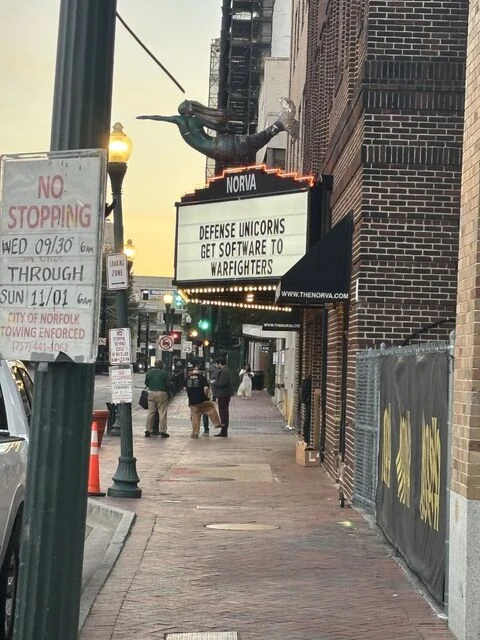
The message outside The NorVa.
Continue the conversation on LinkedIn ↗